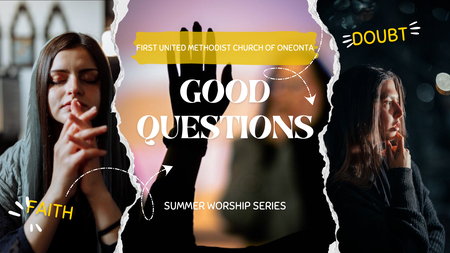
This week's sermon takes on a question many of us have wondered about but rarely discuss openly: what do we actually believe about the virgin birth, and does it matter if we have doubts? Rather than treating it as a science question, the sermon traces how this teaching developed — from the earliest Christian writings, which say almost nothing about Jesus's birth, to the Gospel of Matthew, where a translation choice from Hebrew into Greek helped shape the doctrine we know today.
Along the way, the sermon also clarifies a common point of confusion: the difference between the virgin birth (a teaching most Christian traditions share) and the immaculate conception (a distinctly Roman Catholic doctrine about Mary's own birth, not Jesus's). Understanding that distinction opens up room to ask what's essential to faith and what might be, as the sermon puts it, "the weeds."
Drawing on Paul's letter to Timothy, the message ultimately points away from debates over biology and history and toward what Paul calls the real heart of the gospel: love. Whether you read the virgin birth as literal history or as a faith-filled way of naming something extraordinary, the invitation is the same — to see the story not as being about Mary's biology, but about the God who chooses, again and again, to enter the world in love.
Whether you come with firm convictions or honest questions, this sermon offers space for both.